
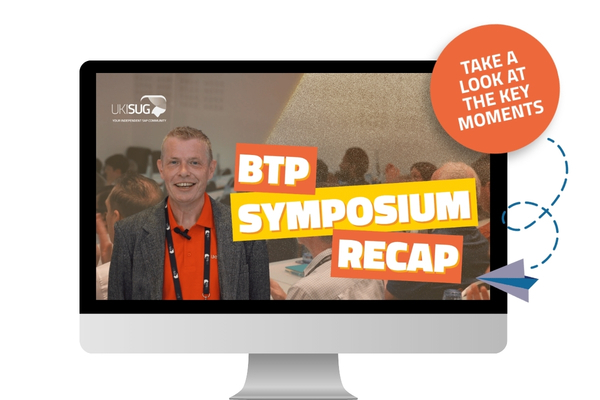
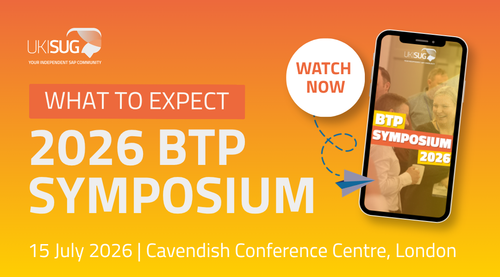
This year the UKISUG BTP Symposium is heading to the Cavendish Conference Centre
Join leading SAP users and industry specialists where strategy meets hands on insight. Explore the latest advancements, collaborate with peers, learn from customer experiences and uncover new ways to modernise, integrate and innovate across your SAP landscape.
Featured Sessions:

In Aliter's Keynote Session, discover how Capita modernised a heavily customised SAP Enterprise Portal without disrupting their ECC core by adopting SAP Business Technology Platform (BTP). In partnership with Aliter Consulting, Capita delivered 25 new Fiori applications, introduced side‑by‑side extensions using SAP BTP ABAP Environment and implemented modern DevOps and security foundations. This session highlights the architecture, approach and outcomes that enabled Capita to enhance user experience, reduce technical debt and future‑proof their landscape, demonstrating how organisations can innovate today, ready for moving to S/4HANA.
Within Aliter's breakout session they discuss how they provide ongoing SAP BTP Operations Support for Capita PLC, one of the UK's largest business process outsourcing providers. As the operational backbone behind Capita's growing portfolio of SAP BTP applications, Aliter ensures their cloud platform remains secure, stable and continuously optimised, enabling their teams to focus on delivery rather than infrastructure.
As organisations move beyond experimentation and prototyping of SAP AI technologies, the challenge shifts from building solutions to governing and operationalising AI at scale within complex enterprise environments. In this customer session, AstraZeneca explores how SAP AI technologies can be effectively adopted and governed across a heterogeneous technology landscape, where SAP solutions must interoperate with broader enterprise platforms and AI tools. It highlights how SAP Business Technology Platform provides the foundation for AI at scale.

In this session, Dave Williams shares how Bluestonex supported Sysco to standardised operations across 21 warehousing sites, using SAP BTP and how they build scalable, high availability warehouse applications that unify processes, deliver real time operational insight and future-proof their landscape, without further investment in outdated WM/EWM solutions.

With the success of your business hanging on the quality of your data, James Rothwell from Invenio shares how they are helping customers to leverage their data for a smooth migration, sustained operations and the best insights possible. This session is ideal for anyone who wants to get the most out of the data they already have as they shift to S/4HANA and beyond.

Many organisations think they need entirely new platforms to begin their AI journey. In reality, much of the data needed to power meaningful AI initiatives already exists within SAP. This session explores how SAP serves as the critical system of record that enables enterprise AI strategies, rather than acting as the AI platform itself.

Many organisations are investing in AI, but far fewer are turning pilots into operational business value. In SAP-led environments, the challenge is not access to models; it is trust, control and execution. This session explores why enterprise AI adoption often stalls at the point where it needs to connect to real business process and how organisations can close the gap between insight and action through governed architecture, grounded business context and practical use cases.

This session explores how organisations can improve SAP performance by delivering content directly in the context of SAP business processes. It highlights how one organisation has used OpenText archiving solutions for more than 15 years and now uses Core Archive for SAP Solutions to support mission‑critical SAP documents, ensuring stable access, reduced data footprint and a clean‑core foundation for future transformation.

Many SAP estates still rely on tightly coupled IDoc, RFC and batch integrations that limit agility, visibility and AI readiness. Using a global consumer goods case study, this session shows how SAP BTP helps teams modernise legacy interfaces, introduce event-driven patterns, improve monitoring and put AI to work in a grounded, operational way.

Through real customer examples, we'll show you why SAP Build Process Automation (BPA) matters as part of a broader Clean Core strategy. Rather than another point solution, it's a practical platform that lets your teams, business and IT alike work together to automate what actually slows you down.
Supported By

Key Takeaways
You'll leave the day equipped to:
- Modernise without disruption — extend your SAP landscape using BTP without touching your clean core
- Get your data migration-ready — understand how AI and ML can rapidly identify and remediate data quality issues before your S/4HANA project begins
- Make AI operational — move beyond the pilot stage and close the gap between AI insight and real business action
- Future-proof your integrations — replace brittle IDoc and batch interfaces with event-driven patterns that support agility and AI readiness
- Strengthen SAP performance — use smart archiving and content management to reduce data footprint and improve compliance
- Learn from those doing it now — take inspiration from Capita and others who are innovating on BTP today
Why Attend?
If you're working with SAP, whether you're planning a move to S/4HANA, trying to make AI work in practice or looking to modernise without starting from scratch, this day is built for you. Hear directly from organisations who've been in your shoes, connect with peers facing the same challenges and walk away with ideas you can actually use. This is community learning at its best: honest, practical and grounded in real experience.
This event is especially valuable for data analysts, SAP architects, integration leads, IT managers and anyone involved in transformation, migration planning or enterprise AI initiatives.
Transform the day’s key insights into impactful marketing narratives by sharing what you’ve learned with peers and industry experts over informal drinks, building connections, sparking ideas and turning conversations into opportunities.
Secure your place and join the community shaping the future of SAP Business Technology Platform.
Community Chairs

Sandeep Pankhania
Sandeep has been involved in the Business Intelligence arena for the past 17 yrs. Over this time he has undertaken roles such as Bi Implementation and Exploitation Manager. In his current role Sandeep is looking at how technologies and data around Platform and Database can help drive new insight within organisations.

Glenn van der Meijden
Glenn van der Meijden has worked in the SAP ecosystem across industries for over two decades. He has led large-scale SAP transformation programs and rollouts, driving innovation in emerging technologies. With deep technical expertise across a broad SAP portfolio, architecture skills and proven strategic leadership, he excels in complex implementations. His experience makes him a valuable addition to our growing community.
Committee

Claire Trew
Claire has over 20 years of experience in the affordable housing sector, working in a range of roles from front-line housing officer to her current role as Lead Functional Architect. She has been working with SAP since 2014, initially as part of a project team at Sanctuary Housing which delivered the first wide-scale implementation of SAP in the sector. Claire currently works in Sanctuary’s internal SAP team, working on a range of projects to deliver change and helping to ensure that the business can continue to develop and grow. Claire has been an active member of the user group since 2015 and has been chair of the Real Estate Focus Group.