Why transformation ambition does not always translate into sustained operational value
Most SAP transformation programmes begin with a clear ambition.
Modernise legacy technology. Improve productivity. Reduce cost. Increase visibility. Build a foundation that is the platform for growth.
What I continue to see across industries is that the difficulty is not defining the ambition, but making sure it translates into measurable improvements in the way an organisation actually operates. There’s a need because every business needs to improve security, remove duplication, introduce a clean core and reduce complexity, none of which is usually based on or supported by strategy.
Technology is an important part of that, but successful transformation really depends on something broader: connecting strategy, process, people, operational reality and technology around the outcomes an organisation is trying to achieve.
That is where the gap between implementation and transformation can emerge.
An SAP transformation programme can meet its technical milestones and still fall short of the original business case. Processes may remain inefficient, operational constraints can shift rather than disappear, and people may end up working around the new system rather than realising the value it was intended to deliver.
A programme can go live without the organisation being fully transformed.
Three conditions that help close the gap
In my experience, sustained operational value depends on three closely connected conditions.
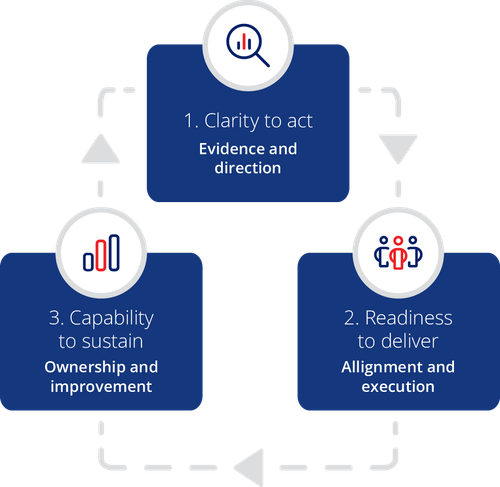
Clarity to act
Transformation should begin with the value the organisation needs to create, then establish what needs to change, why it matters and where that value is currently being constrained.
That means looking beyond how processes are supposed to work and understanding how they operate in reality across people, systems and functions.
Process intelligence can make variation, bottlenecks and exceptions visible, but that evidence becomes far more valuable when it is combined with the experience of the people doing the work.
I have seen this first-hand in our work with a leading British home furnishings retailer. The operation was already meeting its KPIs, but a deeper review using SAP Signavio, operational observation and analysis of millions of records exposed off-system workarounds, underused SAP functionality and further opportunities to improve performance.
The important point here was not simply that more data became available, it was that the process and system evidence became much more useful when we interpreted it alongside the reality of how the operation actually worked.
Readiness to deliver
Once the problem is understood, the future state needs to work operationally, not simply technically. Process, people, supply chain, data, governance and technology all need to align around the intended outcome.
That is why I favour a process-led, technology-enabled approach to SAP transformation.
SAP S/4HANA, SAP EWM and SAP Signavio can provide powerful capabilities, but the technology should not be considered in isolation. Its value depends on the wider organisation being ready to adopt the change and on the process and operating model around it being fit for purpose.
The practical principle is simple: start with the process and the operational outcome, then determine how technology can best enable them.
Capability to sustain
Go-live is an important milestone, but it is not where transformation value is secured.
This is where we see organisations underestimate the work still to be done. Clear ownership, the right behaviours and measures, and the capability to solve problems all need to remain after the implementation team steps away.
People need to understand more than how to use a new system. They need to understand why the organisation is changing, what the new process is intended to achieve and how their role and decisions will be different.
Technology can provide visibility, but sustained value depends on people being able to understand what the evidence is telling them and act on it.
Transformation does not stop at go-live.
Clarity, readiness and capability are closely connected rather than separate stages.
Readiness testing may challenge the original diagnosis. Implementation can expose constraints that were not obvious during design, while performance after go-live can reveal the next opportunity for improvement.
Transformation is therefore a continuing cycle of understanding, alignment, delivery and improvement.
For me, this is what separates implementation from transformation. SAP can be a powerful enabler throughout the cycle, but sustained operational value comes from how effectively the technology is connected to the processes, people and operating environment around it.
Read the full insight paper
If any of this thinking, or the webinar resonated with major change and transformation challenges you face in your own organisations, I’d encourage you to read our insight paper; Turning transformation ambition into sustained operational value.
It explores in depth how organisations can create an evidence-based case for change, connect operating-model and technology decisions, test readiness before implementation, and build the ownership and continuous-improvement capability needed to sustain value beyond go-live.
It also includes practical customer examples showing how each condition works in practice, and I’d be very happy to continue the discussion if any of the challenges feel familiar.