Compliance Is Becoming a Team Sport: What SAP Customers Can Learn from CrimSync Liverpool
For many SAP customers, regulatory compliance is no longer a periodic reporting exercise handled quietly at the end of a financial cycle. It has become a continuous business discipline shaped by e-invoicing mandates, real-time transaction controls, statutory reporting requirements and the growing expectation that finance, tax and IT teams can respond quickly to regulatory change.
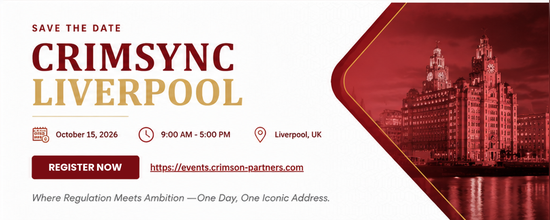
That shift is the backdrop for CrimSync Liverpool Chapter #1, a customer and partner summit – scheduled for October 15, 2026, from 9:00 a.m. to 5:00 p.m. at the historic Royal Liver Building in Liverpool, UK – bringing together compliance practitioners, SAP specialists, finance leaders, and digital transformation teams. While the event is built around SAP-enabled compliance and data topics, its wider relevance is the way it reflects a broader change in enterprise technology: the most effective compliance strategies are increasingly collaborative.
From local obligation to global operating model
One of the most difficult challenges for multinational organizations is balancing local regulatory requirements with global process standardization. SAP describes SAP Document and Reporting Compliance as a solution designed to help organizations transform, standardize and harmonize processes globally while complying locally, including support for e-documents, statutory reporting, automation and real-time monitoring. That distinction matters. Compliance is not just about submitting a report; it is about creating an operating model that can absorb regulatory change without fragmenting business processes.
Events such as CrimSync are useful because they create space for organizations to discuss those operating-model questions openly. What should remain standard across markets? Where is localization unavoidable? How can teams avoid building one-off solutions for every new mandate? These are practical questions, and they benefit from input across customer teams, product specialists and partners.
Data quality is now a compliance issue
Technology can automate workflows, but automation only creates confidence when the underlying data is trusted. SAP describes SAP Business Data Cloud as a solution that unifies and governs SAP and third-party data with a business data fabric, creating a trusted foundation for analytics and AI. For compliance leaders, this is highly relevant. Reporting accuracy, auditability and exception management all depend on consistent data definitions, reliable source information and clear ownership across business functions.
This is why compliance conversations increasingly overlap with data strategy. Finance teams need visibility into obligations and submission status. IT teams need scalable architectures that work across ERP landscapes. Business users need assurance that what is being reported is complete and explainable. A forum that brings these groups together can help move compliance from a reactive exercise to a more proactive capability.
The value of customer-led discussion
Compliance transformation rarely follows a simple path. Organizations must often manage legacy systems, S/4HANA migration timelines, local deadlines, internal controls, testing cycles and user adoption at the same time. Customer-led discussion is valuable because it exposes the real trade-offs behind these programmers: where teams encountered complexity, what they would approach differently, and which decisions helped them scale beyond a single country or project.
For SAP customers, this kind of peer exchange can be as important as formal product updates. It helps teams compare approaches, pressure-test assumptions and understand how other organizations are preparing for future mandates. It also gives product and partner communities a clearer view of the operational realities customers face. That feedback loop is essential if compliance technology is to remain practical, scalable and aligned with business needs.
A symbolic setting for a future-focused topic
The event’s Liverpool setting adds a useful layer of symbolism. The official history of the Royal Liver Building records that construction began in 1907 and that the building officially opened in July 1911. Today, it remains one of Liverpool’s most recognizable landmarks. Hosting a discussion about digital compliance, trusted data and enterprise transformation in such a venue underlines the connection between commercial heritage and future-facing innovation.
Conclusion
The future of compliance will not be defined by regulation alone. It will be shaped by how effectively organizations connect people, processes, data and technology across borders. CrimSync Liverpool Chapter #1 reflects that shift by creating a space for SAP customers, specialists and partners to exchange practical experience and explore what comes next. For organizations navigating complex regulatory change, the message is clear: compliance is becoming a team sport, and the teams that learn together will be better prepared to respond with confidence.
Author biography
Salam is a Global Partner Manager with experience in SAP partner engagement, customer collaboration and go-to-market initiatives. He works with SAP ecosystem stakeholders on topics including regulatory compliance, SAP Document and Reporting Compliance, SAP Business Data Cloud, customer events and partner-led innovation. In his current role, he focuses on building relationships across customers, partners and technology teams to help translate business priorities into practical collaboration opportunities.